Subtropical mosquito reduction targets the biological cycle of container-breeding species like Aedes albopictus that thrive in Hillsborough County's humid maritime environment. Historic, low-elevation parcels in…
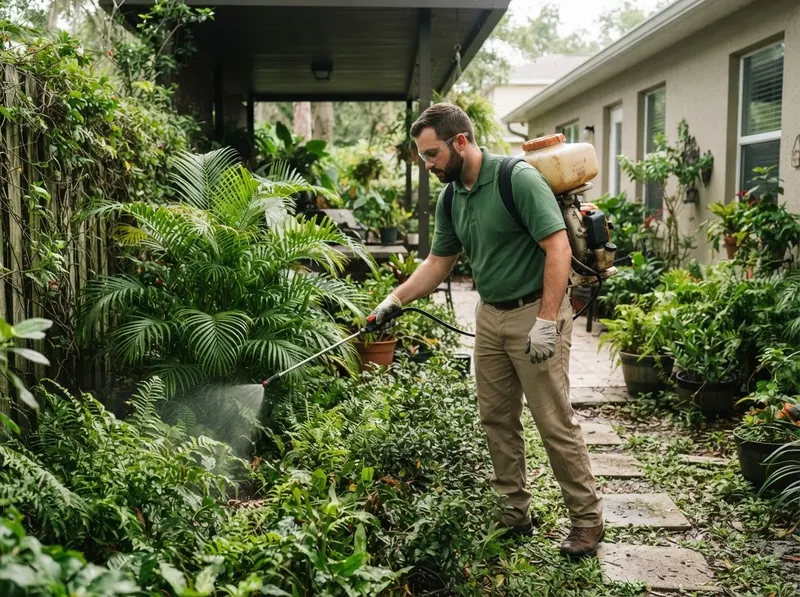
Subtropical mosquito reduction targets the biological cycle of container-breeding species like Aedes albopictus that thrive in Hillsborough County's humid maritime environment. Historic, low-elevation parcels in Seminole Heights, Tampa Heights, and Ballast Point contain mature laurel oaks, dense root structures, and shaded soil pockets that retain rainfall runoff. In these microclimates, standard surface fogging fails because airborne sprays dissipate quickly in the heat, whereas focused foliage residual treatments bond directly to the undersides of leaves where adult mosquitoes shelter during high daytime temperatures.
Standing water sources differ substantially across Tampa neighborhoods, dictating precise mechanical adjustments during application. Coastal properties along Davis Islands and Palma Ceia frequently feature tropical ornamental bromeliads, where water trapped in central leaf axils generates larval nurseries safe from surface winds. Treating these plants with targeted biological larvicides containing Bacillus thuringiensis israelensis prevents pupation without degrading ornamental foliage. For larger suburban parcels in Westchase and New Tampa, sprawling conservation boundaries require wide-band barrier treatments along property margins to intercept pests migrating out of low-lying wetlands.
Selecting standalone seasonal mosquito suppression over total-property enclosing screening comes down to operational coverage versus physical permanence. Solid pool cages and patio screens stop mosquitoes in a tight patio enclosure, but leave open grass, fire pits, and play structures completely unprotected. Barrier misting extends functional outdoor utility to the property line, though dense summer squalls along Bayshore Boulevard necessitate re-application intervals roughly every 21 to 30 days to maintain chemical persistence against newly emerged broods.
Technicians proceed systematically: 1. Conduct an initial perimeter scan to map stagnant moisture collection sites like gutter downspout basins, unsealed saucers, and dense foliage pockets; 2. Treat identified non-draining water reserves with granular microbial larvicide to neutralize existing vectors; 3. Spray shaded foliage, shrubs, and low canopy trees with low-toxicity residual controls up to a height of 10 feet; 4. Establish a continuous chemical barrier along exterior fence perimeters and foundation walls to suppress incoming migratory swarms.
Every job gets a firm, written price after a free on-site visit.
Tell us about your subtropical mosquito reduction job in Tampa and we'll send a clear, written quote, usually the same day.
 Palmetto Hawk Pest Control