Tampa commercial kitchens face sustained insect and rodent pressure due to average annual relative humidity levels of 74% and deep heat pockets generated beneath line equipment. In historic brick structures across Ybor…
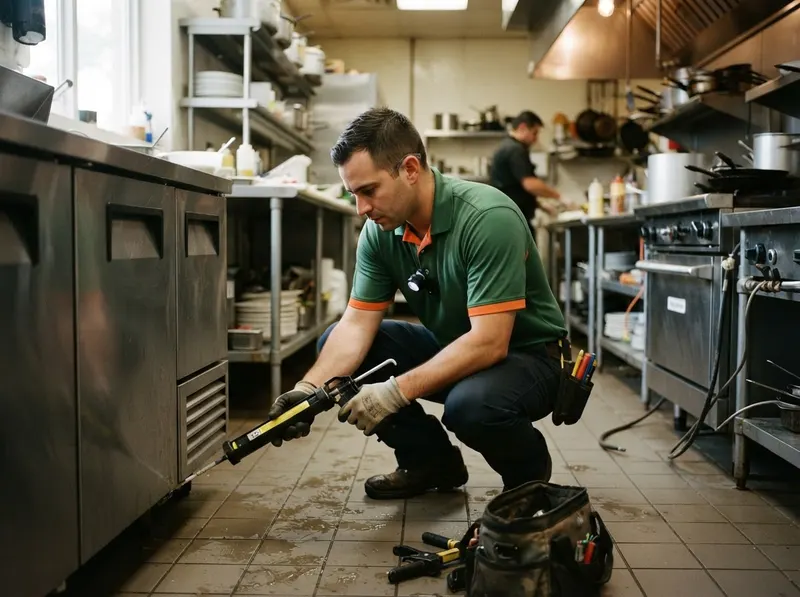
Tampa commercial kitchens face sustained insect and rodent pressure due to average annual relative humidity levels of 74% and deep heat pockets generated beneath line equipment. In historic brick structures across Ybor City and Seminole Heights, exterior structural shifting allows American cockroaches and roof rats to slip through utility conduits as narrow as 0.25 inches. Inside modern, high-turnover prep spaces in the Channel District or Hyde Park, high-volume washdowns frequently wash away over-the-counter floor treatments while depositing organic sludge inside tile grout and floor drains. This creates an ideal breeding medium for drain flies and phorid flies. The defense focuses on micro-encapsulated baits, insect growth regulators applied behind wall voids, and mechanical exclusion around copper drainpipes rather than chemical sprays that could contaminate stainless steel tables or open food lines.
Commercial kitchen operators often choose between recurring monthly spray subscriptions or an targeted barrier protocol. A continuous chemical spray coats high-traffic floor areas, yet it frequently breaks down within 72 hours under daily enzymatic mopping and hot-water sanitization cycles. The trade-off is clear: high-frequency superficial spraying costs less per visit but leaves compressor motor compartments and hollow table legs vulnerable to German cockroach nesting. A physical barrier approach requires targeted gel applications in dry voids, enzymatic bio-cleaning inside drain traps, and door sweep adjustments. This prevents immediate re-infestation without requiring multi-year lock-in agreements that penalize changing kitchen operations.
Execution follows an exact three-step sequence. Step 1: Technicians survey the entire cookline, inspecting the rubber gaskets on walk-in coolers, motor sumps on reach-in lowboys, and ceiling drop-tiles for localized signs of frass, grease markings, or structural breaches. Step 2: Mechanical traps and food-safe insect growth regulators are deployed directly along conduit runs and behind wash sinks, ensuring zero contact with commercial prep zones. Step 3: Technicians detail structural gaps under exterior delivery doors along access alleys, providing digital documentation of all actions taken to satisfy health code inspectors during state operational audits.
Every job gets a firm, written price after a free on-site visit.
Tell us about your commercial kitchen pest control job in Tampa and we'll send a clear, written quote, usually the same day.
 Palmetto Hawk Pest Control