Securing a residential perimeter requires an aggressive pest control service in Tampa that directly addresses the intense biological pressures generated by Hillsborough County's humid, subtropical climate. High ambient humidity, continuous seasonal warmth, and sudden tropical rainfall push native and invasive species out of their natural nesting sites and straight into residential wall cavities, crawlspaces, and attics.
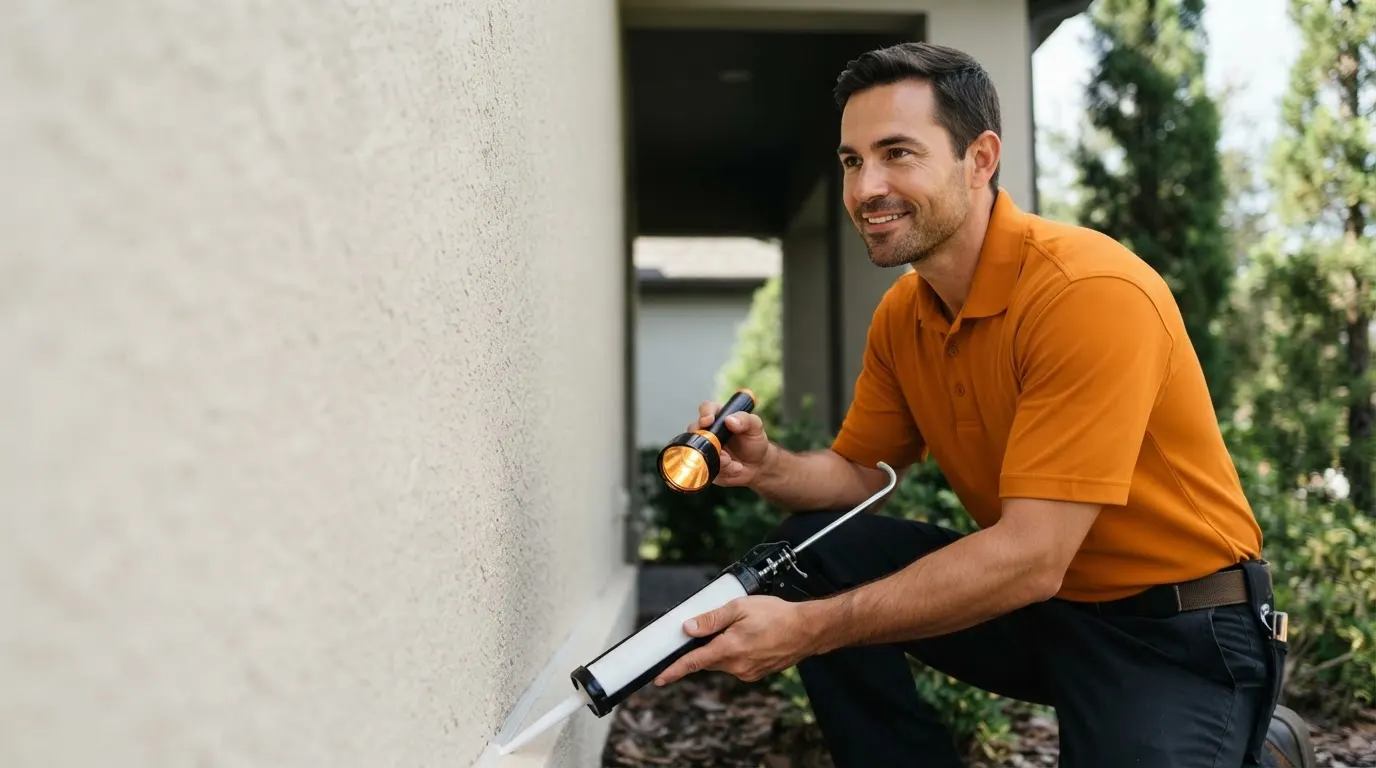
Pest Control Service in Tampa is a specialized structural defense and extermination process that eliminates wood-destroying organisms, invasive insects, and rodents from residential and commercial structures throughout Hillsborough County.
Every service reflects the same meticulous attention to detail, whether it's a single job or a larger pest control service project across Tampa.
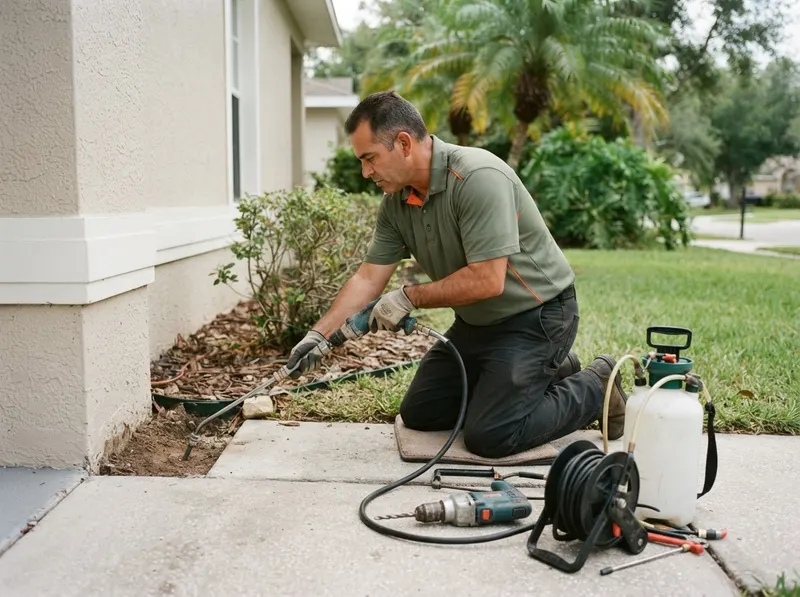
Soil trenching and non-repellent liquid barrier treatments create an impenetrable perimeter defense against native subterranean termites and aggressive Formosan termites around building slabs and foundation pilings. Technicians excavate continuous trenches along exterior foundation perimeters, applying precision-metered termiticides that foraging worker termites track back to the central subterranean queen. For monolithic concrete slabs with interior bath traps, pressurized rod injections push chemical barriers directly into beneath-slab soil voids where plumbing lines penetrate concrete. This method eliminates active subterranean colonies within 60 to 90 days and establishes a multi-year subterranean defense boundary that stops hidden structural tunneling before it destroys framing timbers, subfloors, and structural load-bearing studs.
Get a quote →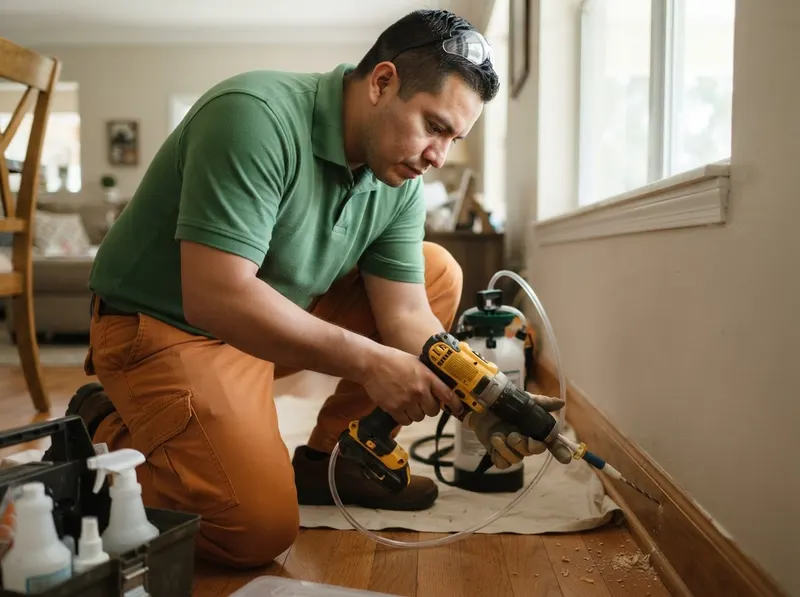
Direct structural wood injections and localized borate applications eliminate active drywood termite colonies inside structural attic timbers, window casings, door frames, and exposed fascia boards without requiring tenting or structural vacating. Technicians locate active infestation galleries using acoustic detection and fiber-optic borescopes, drilling precision micro-apertures directly into infested lumber to inject pressurized expanding foams containing concentrated termiticides. These expanding foam formulations travel through internal timber galleries, coating every reproductive nymph and soldier termite within hours. Exposed structural rafters and attic crawlspace lumber are coated with disodium octaborate tetrahydrate solutions, which absorb into the outer timber layers to render the wood completely indigestible to future drywood swarmers looking to establish new colonies.
Get a quote →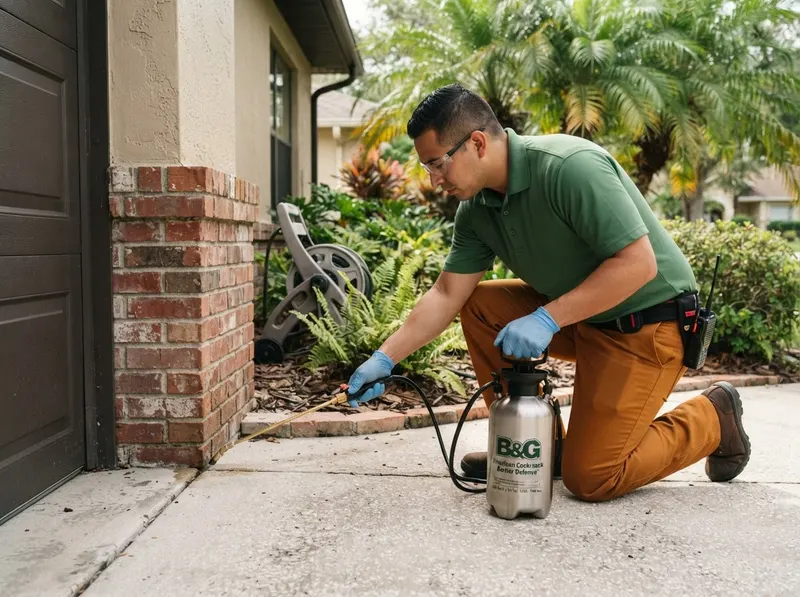
Residual micro-encapsulated spray barriers applied around home foundations, window frames, weep screeds, and exterior plumbing entry points prevent large peri-domestic palmetto bugs from penetrating living areas. Palmetto bugs inhabit damp exterior mulched landscaping, storm water drain networks, and decaying palm litter before marching toward structures during intense summer storms. Technicians establish a three-foot upward foundation spray combined with a six-foot outward ground band using UV-stabilized suspension concentrates that adhere to textured stucco, decorative brick, and raw concrete. Water-resistant granular insect growth regulators are distributed throughout ground mulch, decorative flower beds, and exterior utility boxes to eliminate juvenile nymphs and adult cockroaches before they crawl up siding and squeeze through weather-stripping gaps.
Get a quote →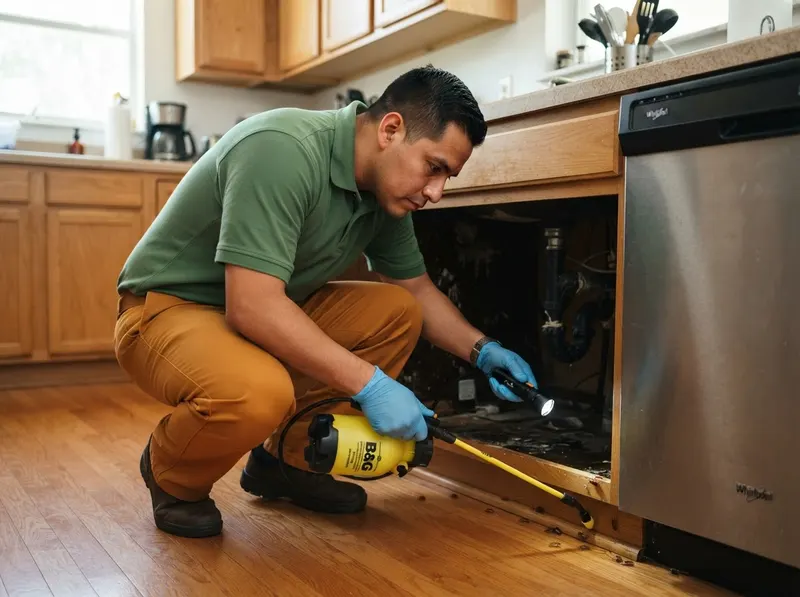
Multi-stage interior treatments combine non-repellent insect growth regulators, micro-gel bait placements, and localized crevice flushing to disrupt breeding cycles inside kitchen cabinetry and appliance voids. Unlike exterior roach species, German cockroaches establish nesting colonies directly inside warm motor housings of refrigerators, dishwashers, microwave ovens, and electrical outlets. Technicians apply targeted aerosol flush agents containing pyrethrins into narrow structural seams to force hidden insects into contact zones, followed by the strategic placement of high-potency bait matrixes containing active ingredients like indoxacarb or dinotefuran. Insect growth regulators prevent immature nymphs from completing molts into reproductive adults, breaking the reproductive cycle and eradicating heavy multi-generational indoor infestations within two to three distinct treatment intervals.
Get a quote →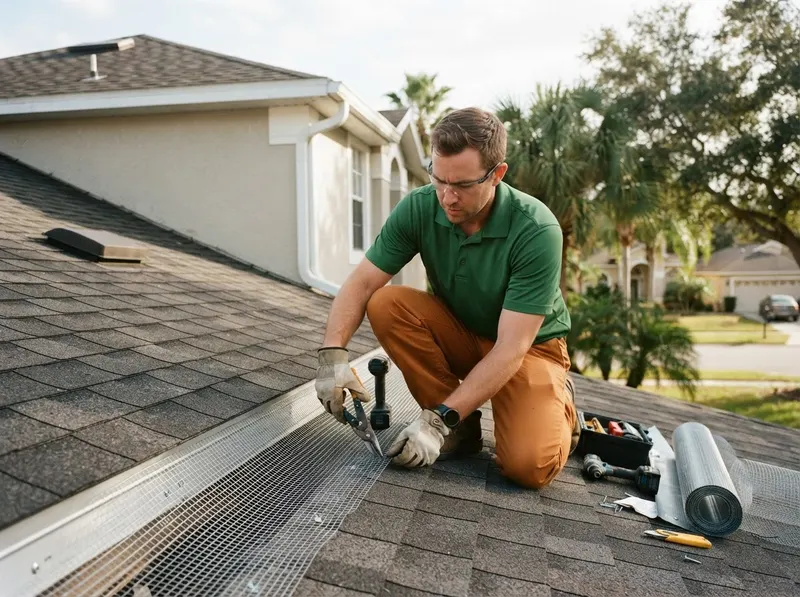
Mechanical entry point sealing using 23-gauge galvanized steel hardware cloth, metal flashing, and expanding copper mesh along soffit gaps, roof returns, ridge vents, and plumbing stacks stops invasive roof rats from nesting inside conditioned attic insulation. Roof rats exploit overhanging branches, utility lines, and rough exterior brick to gain access to upper elevations, squeezing through openings as small as a nickel. Technicians conduct complete 360-degree roofline audits, custom-fitting rust-resistant structural barriers over gable vents, open fascia junctures, and eave corners without compromising proper attic ventilation. Sealing these entryways terminates attic migration highways, protecting interior electrical wiring from gnawing, preserving structural thermal insulation, and safeguarding conditioned spaces from bio-hazardous rodent waste.
Get a quote →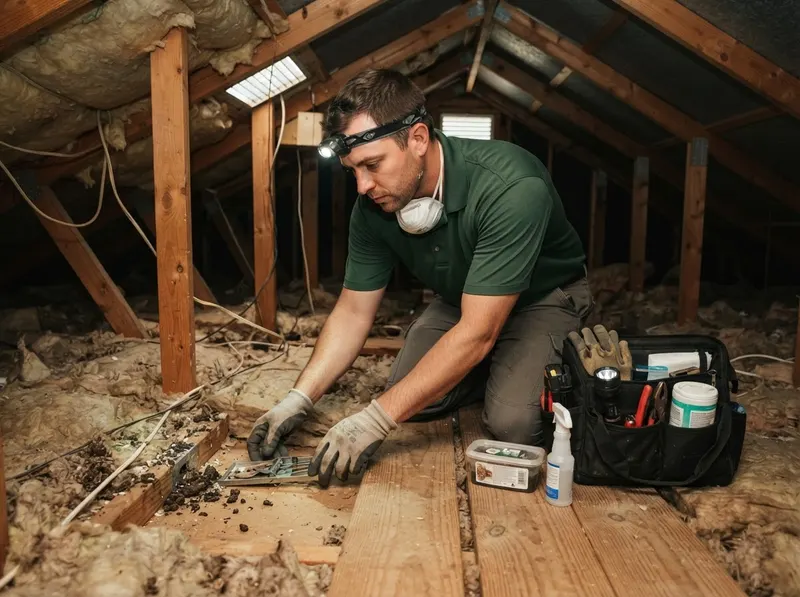
Targeted mechanical trap configurations remove active rodent populations from attic crawlspaces, paired with bio-enzymatic spray applications to neutralize pheromone scent markers. Following comprehensive exterior exclusion, industrial mechanical snap-trap runs are established along structural joists, insulation runways, and localized nesting zones inside the attic. Traps are monitored and reset until zero attic activity remains, avoiding the use of anticoagulant rodenticides that leave poisoned rodents decaying inside inaccessible wall cavities. Once the interior attic population is cleared, technicians apply broad-spectrum bio-enzymatic sprays to digest urine deposits, droppings, and natural rodent pheromones that attract outside rat populations, sanitizing the attic environment and restoring residential air quality.
Get a quote →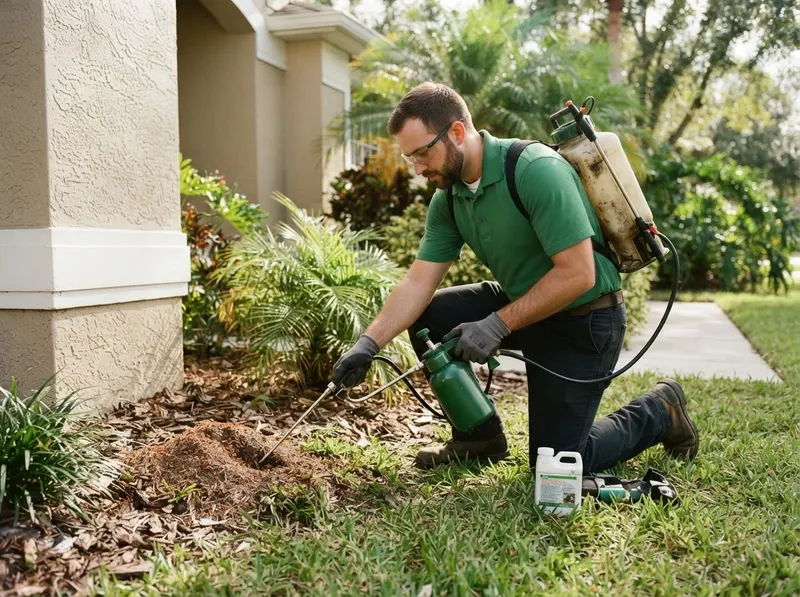
Broadcast application of specialized granular insect growth regulators and targeted mound drenching eliminates aggressive Solenopsis invicta mounds across lawns and exterior foundations for up to six months. Red imported fire ants construct massive subterranean tunnel networks beneath turfgrass, decorative rock beds, and electrical transformer enclosures, inflicting painful venomous stings on humans and household pets. Technicians use calibrated broadcast spreaders to distribute slow-acting food-attractant bait granules across the entire lawn perimeter, which foraging worker ants carry deep into the colony to feed the reproductive queen. Sterilization of the queen terminates egg production, causing complete colony collapse within two to four weeks, while spot-drenching treatments neutralize defensive surface mounds encroaching on concrete patios, pool decks, and children's play areas.
Get a quote →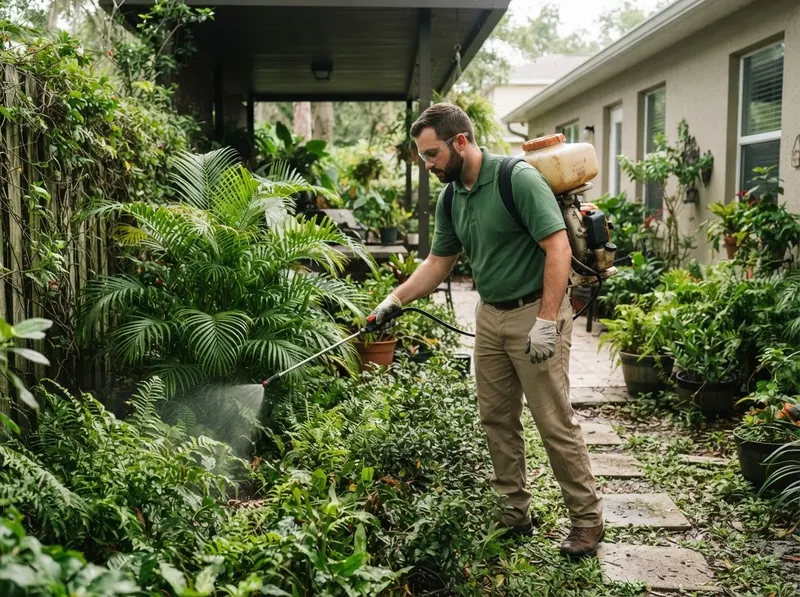
Targeted misting of shaded ornamental foliage and resting harborages using biological larvicides and residual adulticides reduces standing mosquito populations after severe summer rainfall. Subtropical mosquitoes breed rapidly in standing water collected by bromeliads, clogged gutters, decorative planters, and low drainage swales common throughout Hillsborough County. Technicians deploy commercial backpack mist-blowers to coat the undersides of broadleaf shrubs, dense ornamental hedges, and covered patio perimeters with micro-encapsulated adulticides that kill landing mosquitoes on contact for weeks. Technicians also deposit biological Bacillus thuringiensis israelensis (BTI) tablets into permanent exterior standing water reservoirs to selectively eliminate aquatic mosquito larvae before they pupate into biting adults, lowering residential mosquito pressures significantly without endangering honeybees or ornamental plants.
Get a quote →You get a firm, itemized quote for your pest control service before any work begins, no surprises, no pressure.
Careful prep, tidy work, and a full cleanup when we are done. We treat your home and belongings like our own.
The same trusted, background-checked team from the first call to the final check.
Selecting an effective structural defense requires matching the biological vector to the specific construction vulnerability of your property. For elevated 1920s bungalows in Seminole Heights with exposed crawlspaces and damp heart-pine piers, subterranean termite trenching and liquid soil barriers are mandatory to prevent catastrophic structural failure. In contrast, modern slab homes in Westchase benefit far more from pressurized exterior weep-screed dusting and mechanical barrier seals that block roaches and silverfish from penetrating drywall tracks.
If you want immediate relief from heavy localized kitchen cockroach activity, choose targeted bait matrix micro-injections combined with non-repellent insect growth regulators; if you are dealing with nocturnal attic scratching along fascia boards near Curtis Hixon Waterfront Park, choose comprehensive hardware cloth structural exclusion paired with mechanical rodent trapping. The trade-off is mechanical installation time and upfront pricing versus recurring chemical perimeter refreshes: exclusion permanently seals physical entryways at a higher upfront cost but eliminates rodent migration routes, while chemical barriers require scheduled bi-monthly renewals to counteract degradation caused by Tampa's 50-plus inches of annual rainfall and blistering ultraviolet exposure. If you have detached garages or extensive live oak canopies overhanging your roofline in Hyde Park, investing in elevated rodent tree-trimming setbacks and roofline flashing shields provides permanent pest isolation; relying solely on exterior poison bait stations creates recurring monthly rodenticide costs without resolving the physical gaps where rodents slip past the soffit line.
Similarly, choosing liquid non-repellent soil treatments for subterranean termites provides up to ten years of continuous below-ground perimeter defense, whereas localized spot treatments address only the visible colony segment inside an infested stud while leaving the subterranean queen and satellite tunnels active beneath the foundation slab. Matching the defense methodology to the physical construction of your home prevents repeated chemical re-applications and guarantees long-term structural integrity against invasive Florida pests.
Every project gets a firm, written price after a free on-site visit. Ranges below for orientation.
Tell us about your pest control service job and we'll send a clear, written quote, usually the same day. Or just call and talk to a real Tampa pro.
(239) 688-5868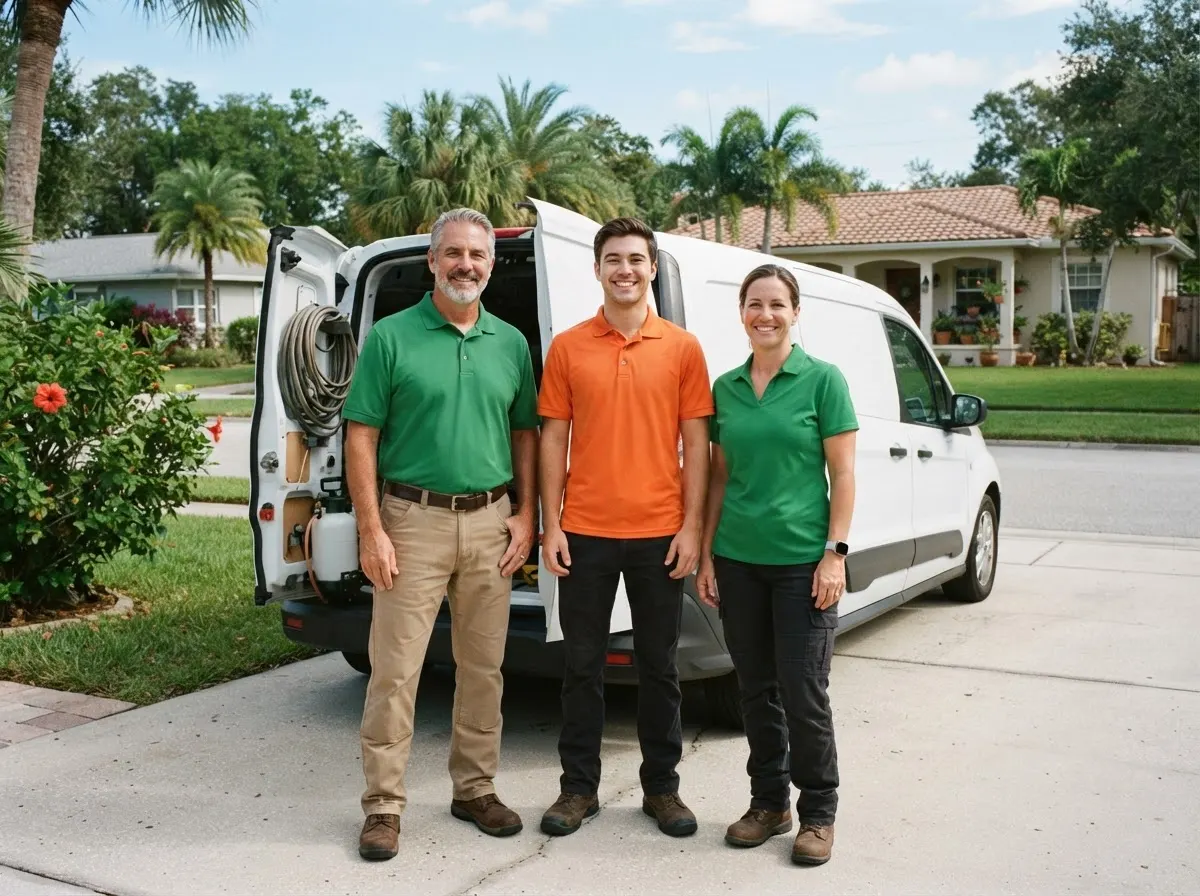
Properties bordering the Hillsborough River and low-elevation coastal zones like Davis Islands and Ballast Point face extreme pest pressures due to high water tables that drive subterranean termites upward and push American cockroaches indoors during intense summer rainstorms. Historic wood-frame houses in Seminole Heights, Ybor City, and Tampa Heights feature open crawlspaces, heart-pine construction, and aged soffits that invite roof rats seeking refuge from heavy afternoon squalls, while master-planned communities in New Tampa and Westchase often battle severe Argentine ant and fire ant trail blooms across expansive turfgrass. Addressing these risks requires targeted applications designed to withstand rapid dilution from subtropical precipitation, paired with mechanical exclusion tactics along structural foundation lines. Tampa's unique coastal geography directly impacts how chemical and mechanical pest barriers perform in the field. Prolonged exposure to high ambient salt air along Bayshore Boulevard accelerates the corrosion of standard steel exclusion meshes, demanding heavy 23-gauge hot-dipped galvanized hardware cloth or aluminum flashing to secure roof eave junctions and foundation crawlspace vents. Furthermore, the city's average annual rainfall of approximately 51 inches frequently drenches exterior foundation perimeters, rapidly washing away water-soluble retail insect sprays and creating swampy perimeter conditions that draw subterranean termites out of saturated soils into residential foundation slabs. During the dry winter months between November and February, lower outdoor temperatures prompt outdoor rodent populations to seek harborage inside warm, insulated attics near Al Lopez Park and ZooTampa at Lowry Park. Effective pest management in Hillsborough County requires an understanding of these microclimate transitions, utilizing insoluble micro-encapsulated chemical suspensions, specialized soil binding termiticides, and rigorous structural entry-point sealing tailored to withstand the Gulf Coast environment.
Free estimates for Tampa & the surrounding area.
 Palmetto Hawk Pest Control